From French Bread to Garlic Focaccia — What Bread Taught Me About Change (Again)
I didn’t set out to learn another lesson. I just wanted to make bread. Not long ago, I wrote about moving from a familiar French bread baked in a Dutch oven to focaccia, and how that shift mirrored the way real change actually happens. Quietly. Slowly. Through process, not force.
This week, I found myself back at the counter again. Same flour. Same water. Same yeast. Different pan. More oil. Garlic. Italian seasoning. And once again, bread had something to teach me.
Starting With What You Know
French bread is structured.
It’s disciplined.
It rewards precision.
The Dutch oven gives you boundaries — literally. Heat, steam, enclosure. You follow the steps, and if you do it right, the loaf rewards you with a crusty exterior and a soft, reliable crumb.
It’s comforting.
But comfort has a way of becoming a ceiling.
When I moved to focaccia the first time, I thought I was changing the recipe. What I actually changed was how much control I was willing to give up.
This second time, I went further.
The Pan Changed Everything
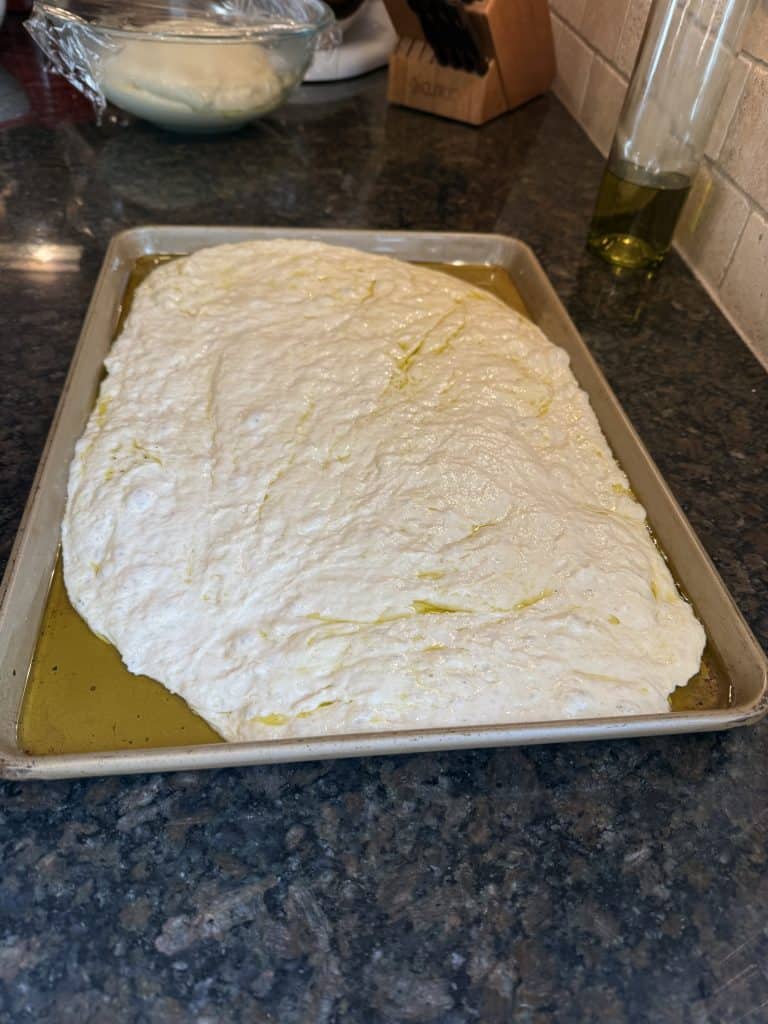
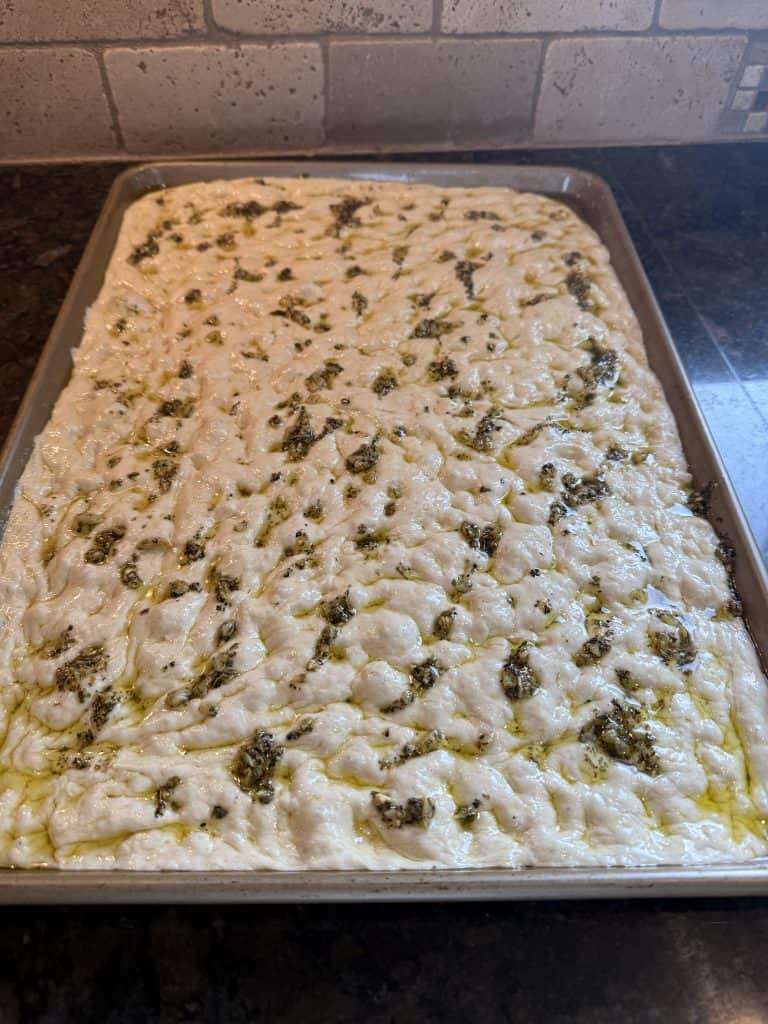
Instead of a Dutch oven, I reached for a 13×18 sheet pan.
Wide. Shallow. Exposed.
No walls to lean on.
No lid to trap steam.
No forcing the dough into a shape it didn’t choose.
Just olive oil pooled generously across the bottom, not as a garnish, but as part of the structure.
That alone changes the mindset.
You’re not shaping the dough anymore.
You’re guiding it.
The Dough Is the Same — The Process Is Not
Here’s the thing that keeps showing up in life too:
The ingredients didn’t change.
- Flour
- Water
- Yeast
- Salt
- Olive oil
That’s it.
But focaccia demands something different from you:
- Patience instead of urgency
- Touch instead of force
- Observation instead of rigid timing
You stretch it gently.
You let it rest.
You come back.
You dimple it — not aggressively, but intentionally.
And then, only after it’s settled into itself, you add the garlic and Italian seasoning.
That timing matters.
Garlic Goes in When the Dough Is Ready — Not Before
This was one of the biggest lessons in this bake. If you mix garlic and herbs directly into the dough too early, they dominate. They tighten the crumb. They interrupt fermentation. Instead, I infused them into olive oil and added them after dimpling, just before the final rise.
That’s when the dough is confident. That’s when it can hold flavor without being overwhelmed.
There’s a metaphor in there somewhere.
Watching for the Signs
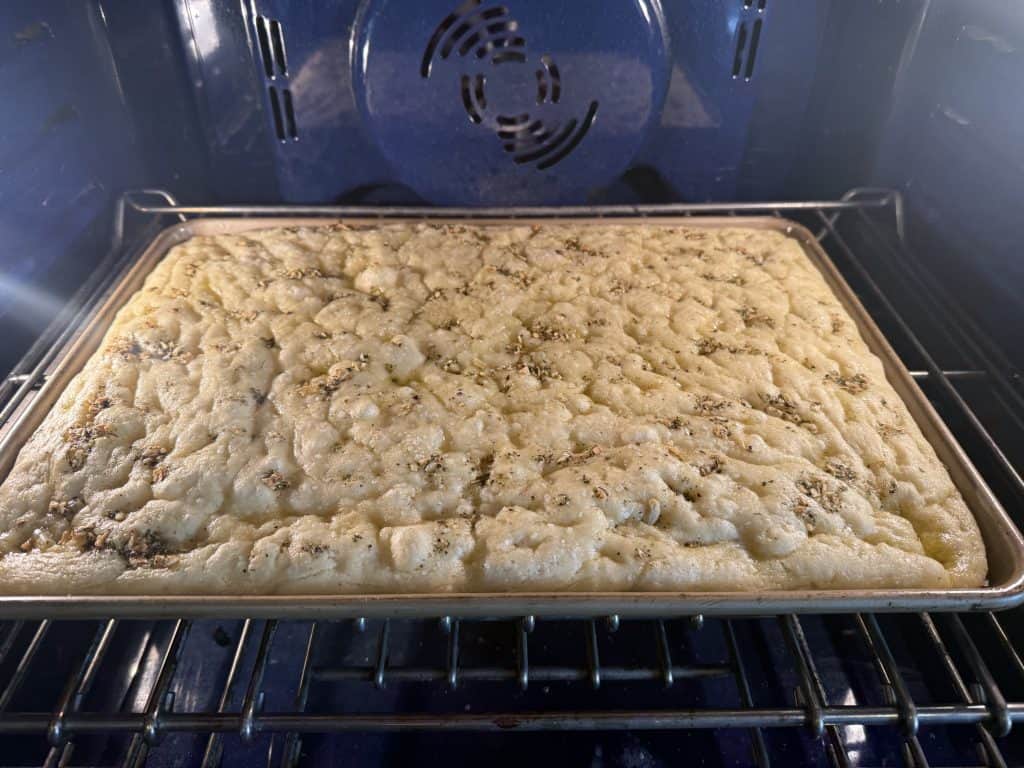
When the pan went into the oven, I stopped watching the clock and started watching the bread.
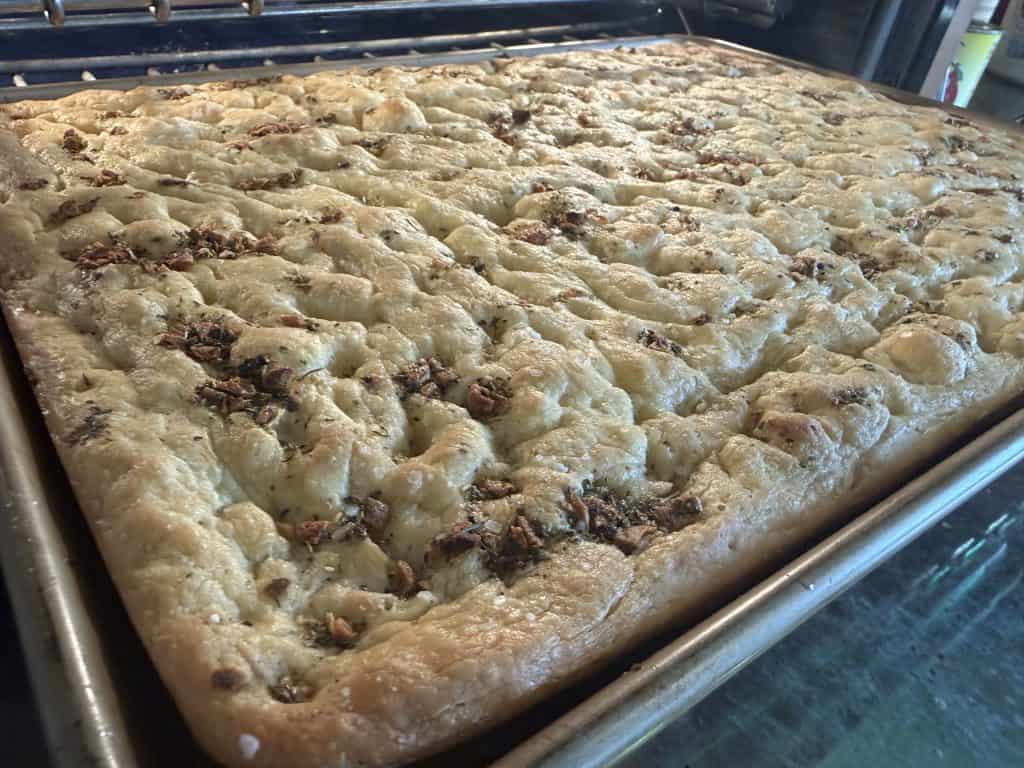
- The edges began to pull away
- The surface shifted from pale to lightly golden
- The oil shimmered instead of pooled
At one point, I moved it to the lower rack for the final few minutes, not because a recipe told me to, but because experience did.
That’s the difference between following instructions and understanding process.
The Moment It Clicked (Again)
When I pulled it out, it wasn’t dramatic.
No applause.
No perfect symmetry.
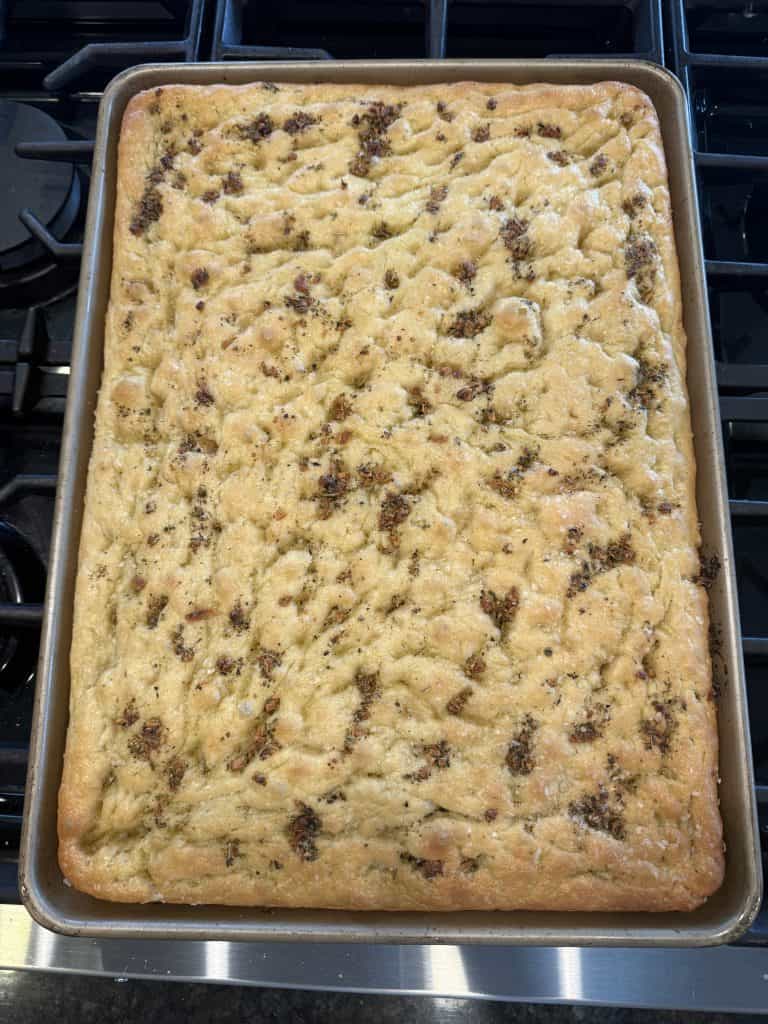
Just a pan of bread that looked… right.
Crisp edges.
Soft interior.
Garlic and herbs tucked into dimples like they belonged there all along.
And I realized something: Change doesn’t come from replacing everything.
It comes from letting the same foundation express itself differently.
How I Served It (and Why It Matters)
I let it cool completely.
That part is hard… but important.
Cutting focaccia too early compresses the crumb and steals the payoff. Waiting lets the structure finish forming. For dinner, I cut it into long strips, not squares. Why? Because focaccia is communal. It’s meant to be torn, shared, passed. Not portioned into perfection.
The Recipe (Garlic & Italian Seasoning Focaccia)
Base Dough
- ~650g flour
- Water (high hydration — dough should be loose)
- Yeast
- Salt
Pan
- 13×18 sheet pan
- Generous olive oil (don’t be shy — it’s structural)
Topping
- Olive oil infused with:
- Minced garlic
- Italian seasoning
- Flaky sea salt (after bake)
Process
- Bulk rise until relaxed and airy
- Oil pan generously
- Gently stretch dough into pan
- Rest
- Dimple deeply with oiled fingers
- Spoon garlic-herb oil into dimples
- Final rise uncovered
- Bake until lightly golden and pulling from edges
- Finish with oil + flaky salt
- Cool fully before cutting
What Bread Keeps Teaching Me
Every time I think I’ve learned the lesson, bread offers a variation.
Same inputs.
Different outcome.
Deeper understanding.
And maybe that’s the point.
Change isn’t a reset button.
It’s refinement.
It’s paying attention.
It’s knowing when to hold firm, and when to let the dough spread.