Improving Memory Starts With Better Notes
We all forget things.
A detail from a meeting.
A great idea we swore we’d come back to.
A paragraph from a book that felt important at the time.
It’s easy to chalk that up to being busy, distracted, or “just how our brains work.” But science tells a slightly different story: memory isn’t about capacity, it’s about process. And one of the simplest ways to improve it is by changing how we take notes.
Why We Forget More Than We Think
For something to stick, it has to be encoded, not just seen or heard, but processed. When information moves too quickly from ears to keyboard or from screen to camera roll, the brain often skips that deeper processing step.
Typing notes verbatim or snapping photos of slides feels efficient, but it’s largely passive. You capture the information… without really engaging with it.
And engagement is where memory lives.
Why Writing by Hand Works Better
Research consistently shows that handwritten notes lead to better understanding and recall than typed notes.
Why? Because handwriting forces decisions. You can’t write everything down, so you summarize. You paraphrase. You interpret meaning instead of transcribing words.
That extra effort activates more brain areas — motor, visual, and cognitive — creating stronger memory traces. In short, writing slows you down just enough to think, and thinking is what makes information stick.
How to Take Notes That Actually Help You Remember
You don’t need a complex system. You just need intention.
1. Write, Don’t Capture
Use a notebook and pen whenever you can. Not to record everything, but to record what matters.
2. Paraphrase in Your Own Words
If you can explain an idea simply on paper, you understand it. If you can’t, that’s a signal to slow down and think it through.
3. Add Structure
Use headings, bullets, or spacing to show relationships between ideas. Organization helps your brain retrieve information later.
4. Review Briefly
A quick glance later that day or the next morning dramatically reinforces memory. You’re telling your brain, this matters.
A Few Bonus Memory Boosters
- Chunking: Group related ideas together instead of treating everything as isolated facts.
- Visuals: Simple diagrams or arrows can reinforce understanding better than words alone.
- Reflection: Ask, “Why does this matter?” before moving on.
Memory improves when information has context and meaning.
A Snow Day Reflection
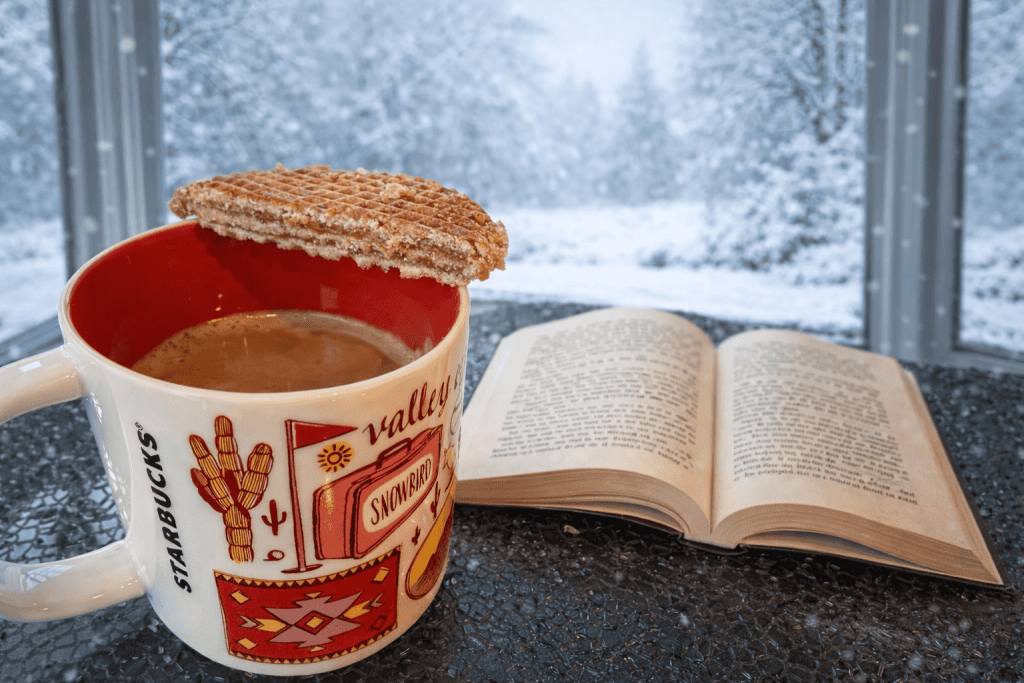
As the snow keeps pouring in, we’re officially snowed in, and it doesn’t look like it’s letting up. One of those rare, historic snowfalls where the world slows down, whether you planned for it or not.
This morning, with coffee in hand and nowhere to rush to, I found myself reading about becoming a better version of myself. One theme kept popping up: improving memory. And yeah, despite what I jokingly tell people, I don’t actually have a photographic memory. I just like to pretend I do.
But maybe that’s the point. Memory isn’t about perfection. It’s about presence. Slowing down. Writing things out. Giving your brain the space to actually hold on to what matters.
Snow days have a funny way of reminding us of that.
Check out this other article for Action now and Action Later: https://www.michaelearls.com/lifestyle/sticky-notes-strategy-how-i-use-post-its-for-action-now-and-a-notepad-for-action-later/