
Expert Mode, No Guardrails — But With Control
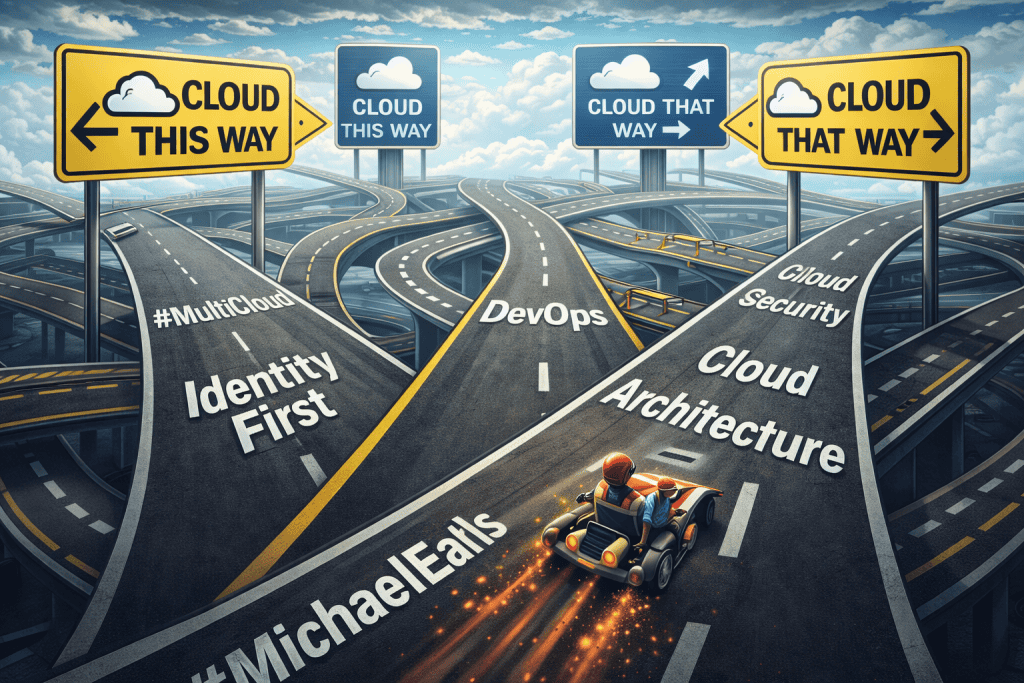
I keep seeing this image pop up, and it won’t let go. At first glance, it looks like a standard hybrid multi-cloud diagram. But the longer I sit with it, the more it feels like something else entirely, like hitting Expert Mode in Mario Kart. Full speed. No guardrails. Miss one turn and everything spirals.
And the uncomfortable part? It feels familiar.
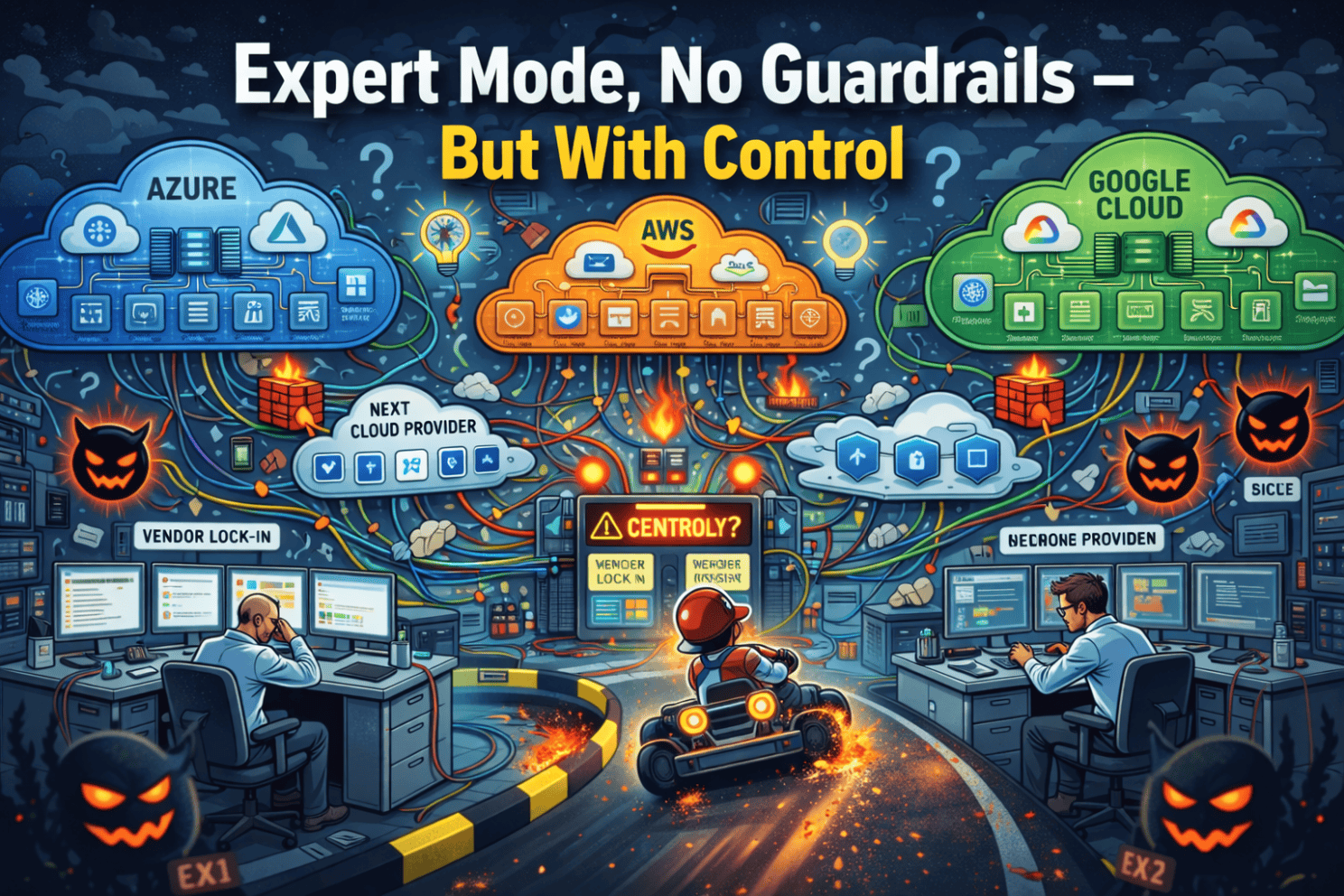
We keep calling what we’re building multi-cloud, but in reality, we’re running multi-everything. Multiple clouds. Multiple identity systems. Multiple automation tools. Multiple security stacks. Multiple billing models. Teams know their slice well, but very few people can explain how it all works end-to-end.
None of this happened because of bad decisions. Every choice made sense in the moment. A new service solved a real problem. A new tool promised speed. A new provider unlocked the capability. But complexity doesn’t grow in straight lines; it compounds. Over time, the environment starts to feel fragile, even when it was designed to be resilient.
I’ve been thinking about this problem for a long time.
Earlier in my career, when I worked at Puppet, the idea was straightforward: use one tool to deploy software and manage configuration consistently across on-premises and cloud servers. At the time, configuration management was the control plane. It gave us a way to reason about messy environments and enforce consistency when infrastructure was still largely self-managed.
Later at Microsoft, the framing evolved. Azure Arc wasn’t about replacing cloud-native tooling; it was about extending identity, governance, and configuration across environments. One plane for authentication and policy, regardless of where workloads live.
Same problem. Different era.
Over the long holiday, I was reading a few posts and kept coming back to an image Jim Sellers shared. It’s an image I’ve seen before, felt before, and honestly, one I’ve probably pushed aside more than once, assuming someone else had already figured it out.
They haven’t.
We’re still searching for the third-party tool that will magically fix everything. The one that promises to abstract multi-cloud, normalize identity, and simplify governance. But every time we add another layer, the same question lingers: does this actually speed us up, or does it just move us onto a different path with a different kind of friction?
That’s where the real tension lives.
Do we build tools above the clouds to normalize everything? Or do we lean into each cloud’s native ecosystem and accept fragmentation?
Where is the real control plane? Identity? Policy? Inventory? Code?
And when bad code gets deployed, because it always does, how do we trace the blast radius, understand ownership, and recover without opening five consoles and hoping the right person is awake?
At 2am, theory disappears. Fewer tools win. Fewer identity paths win. Fewer exceptions win. Architecture stops being about diagrams and becomes about how much cognitive load a human can carry under stress.
It’s January 2026. This dilemma isn’t going away. The next cloud provider is coming. The next must-have service is on the way. The industry will keep promising flexibility, leverage, and resilience, often in tension with each other.
So the real question isn’t whether multi-cloud is right or wrong. It’s how we operate in Expert Mode, full speed, no guardrails, but with control. Because velocity without control is chaos. And control without velocity is stagnation.
Over the coming weeks, I’m going to slow this down and try to tackle each piece head-on: identity-first, platform-first, single-cloud-first, tooling decisions, and what actually matters when things break at 2am.
This isn’t the conclusion. It’s the starting line.
So where do you draw the line? What’s the one control plane you’d protect at all costs when everything else starts to fail?