Handmade in a Digital World
Many stories are circulating today about how AI can generate virtually anything, including photos, art, and even lifelike replicas of things that never existed. I use it myself, and I love what it can do. But on my recent trip to Aruba, I was reminded of something AI will never fully capture: the soul of something handmade.
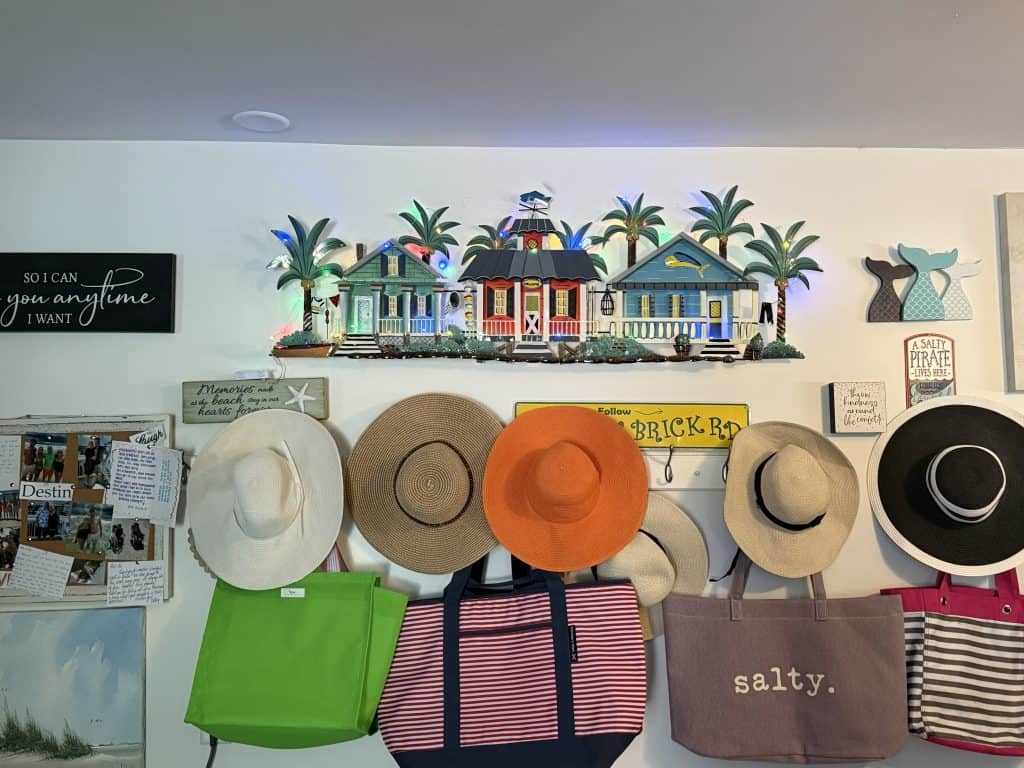
I came across this beautiful wall art in a small local shop, The Juggling Fish. At first glance, you might think it looks like something you’ve seen before: bright colors, palm trees, and little island houses. But then you realize the difference: every brushstroke, every cut of metal, every layer of paint has been touched by an artist’s hands.
This isn’t a stamped, mass-produced item rolling off a factory line. This is hours of patient work. The slight imperfections tell the story of the person behind them, someone who spent their time, skill, and care creating something unique.
On a recent podcast with Simon Sinek and Dr. Michael Gervais, they discussed the distinction between machine-made and handmade, and why handmade items carry significantly more value. Simon shared that when he writes books, he steps away to write first, penning his craft on paper, physically, then uses AI tools later to correct spelling and word choice. The process, the act of creating by hand, is what brings meaning.
The handmade art I found in Aruba is of the same kind. Not made in a factory and not generated by AI, but built by people. And in the end, everything starts and ends with relationships and people.
Yes, there might be another piece in the shop that looks similar, but no two are ever the same. That’s the beauty of handcrafted art: it carries the fingerprint of the maker.
In a world rushing toward faster, cheaper, and automated everything, we need to remember the value of slowing down. To learn a skill. To put in the extra effort. To create something lasting with our hands, whether it’s art, bread, music, or even a handwritten note.
This piece I brought home isn’t just decoration, it’s a reminder. A reminder to celebrate the human touch. A reminder that one-of-a-kind masterpieces don’t just inspire us because they’re beautiful; they inspire us because someone made them.
And maybe that’s the lesson: technology will keep advancing, but it’s the human side of creativity, the patience, the imperfections, the heart, that we should never lose.